
Blog
Why Systems Thinking is Vital in Education
Education conversations often focus on isolated problems—student motivation, teacher burnout, declining achievement, or widening opportunity gaps. While these issues are real, they are rarely isolated. They are usually symptoms of deeper structural conditions within educational systems.
Systems thinking invites us to look beyond individual outcomes and examine how different parts of the educational environment interact. Classroom practices, school leadership decisions, family engagement, curriculum design, and policy expectations all operate within a shared structure. When these elements align, learning environments stabilize. When they conflict, instability appears.
In many school settings, problems emerge not because educators lack dedication, but because systems evolve faster than their foundations. Expectations expand, policies shift, and accountability pressures intensify. Yet the structures that support learning—relationships, pacing, instructional clarity, and developmental sequencing—are often left unexamined.
Strategic pacing becomes critical here. Students develop skills over time. Schools also develop capacity over time. When systems accelerate outcomes without stabilizing foundational practices, confusion replaces clarity and urgency replaces coherence.
For educators, systems thinking encourages reflection on how classroom practices connect to broader structures. For families, it highlights how educational outcomes are shaped by more than individual effort. For school leaders, it emphasizes the importance of aligning policy, practice, and support.
Systems thinking does not eliminate challenges. Instead, it helps educators and communities understand why certain patterns repeat—and how thoughtful design can interrupt them.
Education is not simply a collection of classrooms; it is a living system. When that system becomes clearer, more stable, and more intentionally paced, students, families, and educators are better positioned to succeed.
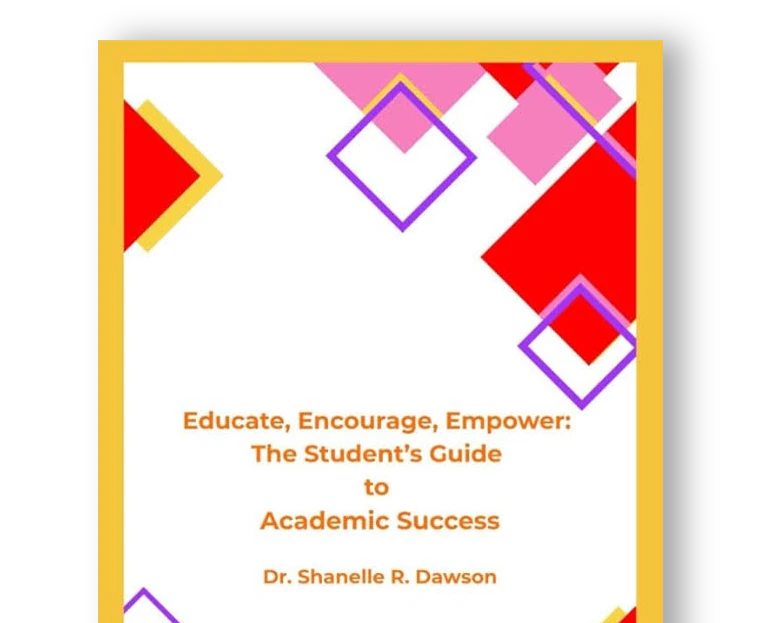
Five upcoming books explore these ideas from multiple perspectives: Teaching Beyond the Classroom, Educate, Encourage, Empower, Queen Moves, Crowned with Purpose and W.E.B. of Wisdom. Book talks are coming soon—be on the lookout for an event near you.
“Success in education is rarely accidental. It is the result of intentional systems.”
Dr. Shanelle R. Dawson
Educator | Author | Systems Thinker
Designing structures that help students succeed.