
Blog
Stepping Back to See the System
Over the past several months, I have explored topics connected to student readiness, family engagement, and the habits that support academic growth. Many of those reflections emerged from conversations about WEB (Wellness, Equity and the Business of Education) and the importance of helping students navigate transitions successfully.
Those conversations remain important. Programs that support belonging, structure, and connection can make a meaningful difference in students’ experiences.
Yet as those discussions continued, a broader realization kept returning: many of the challenges educators, students, and families encounter are not isolated issues. They are connected patterns shaped by the systems in which schools operate.
When conversations focus only on individual outcomes—test scores, behavior, motivation, or effort—we sometimes overlook the structural context surrounding those outcomes. Classroom expectations, school leadership decisions, family engagement practices, instructional pacing, and policy requirements all interact within a shared educational environment. When these elements align, schools feel stable and purposeful. When they conflict, instability can emerge.
This is where systems thinking becomes essential.
Systems thinking invites us to step back and examine how the different parts of education interact over time. Instead of looking at a single classroom challenge or a single policy decision, we consider how structures, expectations, and relationships connect across the entire system.
One of the most important insights from this perspective is the role of sequencing and pacing. Development—whether for students, educators, or schools—happens in stages. Foundations must stabilize before more complex expectations are introduced. When systems move faster than their foundations can support, confusion often replaces clarity.
In the coming weeks, this blog will explore these ideas more intentionally. We will examine how systems thinking, strategic pacing, and relational leadership influence classrooms, school communities, and family engagement.
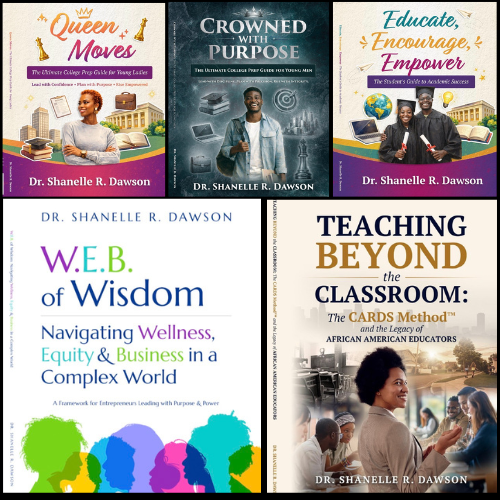
These reflections also connect to several books that will be released soon. Teaching Beyond the Classroom examines the historical, theoretical, and practical foundations of relational leadership in education. The other books—Educate, Encourage, Empower, Queen Moves, and Crowned with Purpose—extend these ideas into practical frameworks designed for students, families, and educators navigating today’s educational landscape.
Together, these works reflect a simple belief: when we understand the systems shaping education, we are better equipped to design environments where students, educators, and families can thrive.
This blog marks the beginning of that conversation.
Four upcoming books explore these ideas from multiple perspectives: Teaching Beyond the Classroom, Educate, Encourage, Empower, Queen Moves, and Crowned with Purpose. Book talks are coming soon—be on the lookout for an event near you.
“Success in education is rarely accidental. It is the result of intentional systems.”
Dr. Shanelle R. Dawson
Educator | Author | Systems Thinker
Designing structures that help students succeed.