
Blog
What If Educators Truly Loved Their Students?
What If Educators Truly Loved Their Students?
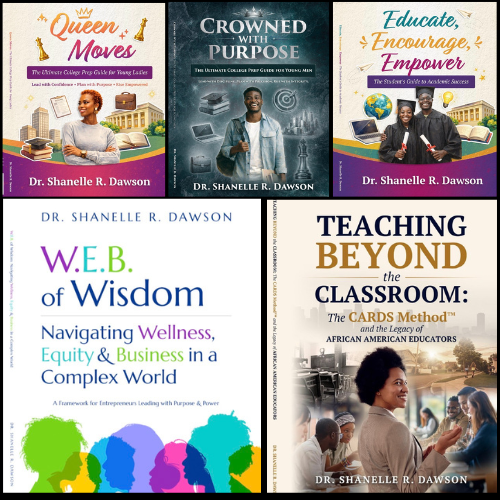
An Excerpt from Teaching Beyond the Classroom
“What if educators truly loved all children and promoted pedagogical practices that challenged the social justification of poverty, sexism, classism, exploitation, and racism?” — Dr. S. R. Dawson
I wrote those words in my dissertation. They became the foundation of Teaching Beyond the Classroom. They are still the question I carry into every conversation about what equity in education actually requires of the adults in the room.
The Transformation
Research clearly states that adequate representation in the teaching profession improves educational outcomes for all students. However, the focus must not center entirely on diversifying K–12 classrooms. It is also necessary to investigate the needs of marginalized students, and how these needs are met on a continuous basis. Much can be gained from adopting a teaching philosophy that prioritizes student wellness and success over standardized testing and district distinction.
Trusting Relationships
Educating students from marginalized circumstances is a complex process involving big-picture considerations and specific instructional strategies. At the very least, these students need to know the adults in their lives are aware of the cultural and social situations they encounter on a consistent basis — and truly care about their personal and academic success. From this foundation, trusting relationships develop and serve as an essential context for learning.
Equity in Instruction
Achieving equity in education requires a shift in educational philosophy and practices. This transformation involves understanding each student’s individual needs and designing educational experiences that address those needs. Furthermore, attaining educational equity requires making sure every student has the support he or she lacks — putting systems in place to ensure that every child has an equal chance for success.
The CARDS Method™
The CARDS Method™ was developed to help educators create a more equitable educational environment. It is based on the historical roles of African American educators prior to Brown v. Board of Education:
C — Counselor · A — Advocate · R — Role Model · D — Disciplinarian · S — Surrogate Parent
Above all else, these institutions knew the importance of genuinely caring for and loving their students. The CARDS Method™ is an equity-based, individualized approach to education — a shift from standardization to individualization that involves understanding the unique needs of each student, then designing educational experiences that help all students achieve.
[email protected] · (800) 803-2095 · DrShanelle.com
Educator | Author | Systems Thinker
Systems That Empower. Strategies That Last.
Every system begins with a decision. Every strategy begins with a purpose.