
Blog
They Are Always Watching. That Is The Weight — And The Power — Of The R In CARDS™.
They Are Always Watching. That Is the Weight — and the Power — of the R in CARDS™.
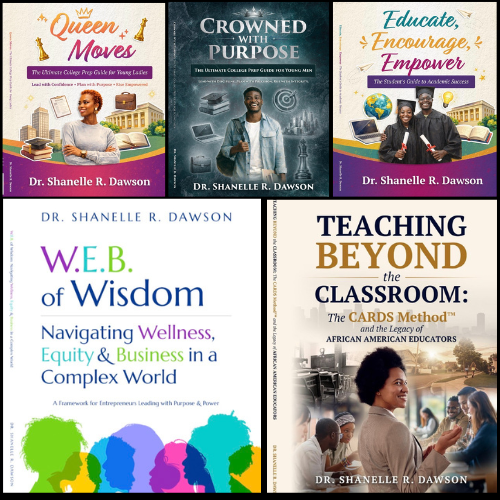
The R in CARDS — from Teaching Beyond the Classroom
Students do not learn from people they cannot see. Not content — anyone can deliver content. They learn from people they can see clearly enough to follow. The R in CARDS™ is Role Model, and it is the most quietly demanding role in the framework — because it is the one you cannot turn off.
What a Role Model Actually Does
Role modeling is not about being perfect. It is about being visible. It is about letting students see how you handle a mistake — do you own it or explain it away? Letting them see how you treat someone who disagrees with you in the middle of a classroom discussion. Letting them see that you are still learning, that you love something, that you take your work seriously, that you show up even on hard days. A student who watches an educator navigate difficulty with integrity has been taught something no lesson plan contains.
The Weight of Being Seen
For many students — especially students who have been failed by adults in their lives — the educator is the closest model of a functioning, purposeful adult they encounter with consistency. That is not a burden to resent. It is a charge to take seriously. Teaching Beyond the Classroom asks educators to understand that the Role Model role operates even when you are not thinking about it. The way you speak to a student in frustration. The way you walk into the room on a difficult morning. The way you keep going. All of it is curriculum.
Role Modeling Is Not Performing
The CARDS educator does not perform for students. They live in front of them. There is a difference. Performance is about image. Role modeling is about integrity — doing the thing the same way whether or not you think anyone is paying attention, and knowing that someone always is. Students are reading you. They are cataloging what they see. The question is not whether you are modeling something. The question is what.
How This Shows Up in the Classroom
The Role Model educator apologizes when they are wrong. They tell students when a question has stumped them and they find the answer together. They name what they value and then act in accordance with it. They talk about their own learning — the book they are reading, the skill they are still building, the professional stretch they are in the middle of. They are not the authority who has arrived. They are the person in committed, visible motion. That is what students remember. That is what students carry.
#EDwithDrShanelle #CARDSMethod #RoleModel #TeachingBeyondTheClassroom #Day20
[email protected] · (800) 803-2095 · DrShanelle.com
Educator | Author | Consultant | Speaker
Systems That Empower. Strategies That Last.
Every system begins with a decision. Every strategy begins with a purpose.