
Blog
The Student Didn’t Come to You With a Behavior. They Came to You With a Story.
The Student Didn’t Come to You With a Behavior. They Came to You With a Story.
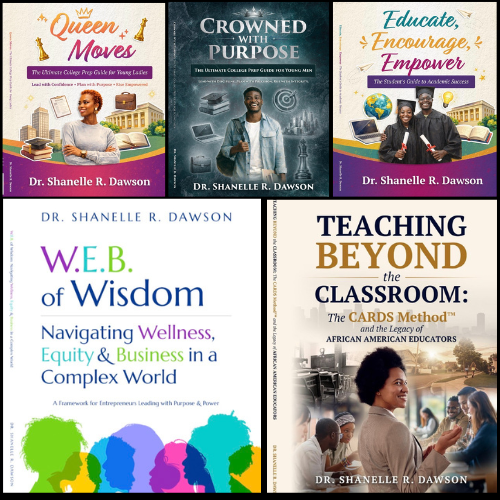
The C in CARDS — from Teaching Beyond the Classroom
There is a version of classroom management that treats students as behavior problems to be solved. A student acts out and the educator responds — with a referral, a consequence, a call home. The problem is contained. The student is managed. And the reason behind the behavior is never touched. The C in CARDS™ is Counselor, and it asks educators to do something harder than managing behavior: to understand what is beneath it.
What Counselor Actually Means
The Counselor role in the CARDS Method™ does not ask educators to become licensed therapists. It asks them to become people who listen before they react. Who ask questions before they conclude. Who create enough safety in the classroom that a student can bring something real without fearing what comes next. The Counselor educator recognizes that a student who cannot focus is not always a student who will not. Sometimes they are a student who cannot — and the educator who knows the difference changes what happens next.
The History Behind the Role
In Teaching Beyond the Classroom, I ground the CARDS Method™ in the legacy of African American educators — teachers who worked with students carrying the weight of poverty, segregation, violence, and instability, and who refused to treat those conditions as disqualifying. They counseled their students. They asked what was happening at home. They sat with them. They held the full person, not just the academic profile. That was not sentimentality. It was strategy — because the student who feels held can learn.
What the Counselor Role Requires
To inhabit the Counselor role is to build a classroom where students trust that what they share will be handled with care. It means checking in, not just checking for completion. It means learning to read what is happening in a room before it escalates. It means knowing when a student needs redirection — and when they need five minutes and a quiet acknowledgment that you see them. This is not softness. This is the intelligence that makes every other role more effective.
One Question That Changes Everything
Before this week ends, I want you to identify one student whose behavior has been challenging — and ask yourself: do I know what is behind this? Not what the behavior looks like. What is driving it. The Counselor educator does not always have the answer. But they are always asking the question.
The CARDS Method™
C — Counselor · A — Advocate · R — Role Model · D — Disciplinarian · S — Surrogate Parent
[email protected] · (800) 803-2095 · DrShanelle.com
Educator | Author | Consultant | Speaker
Systems That Empower. Strategies That Last.
Every system begins with a decision. Every strategy begins with a purpose.